When shopping for the perfect outdoor sunshade, most people focus on the canopy's size, color, or pattern. However, the true hero of any durable beach or patio umbrella lies beneath the fabric: the frame. The umbrella frame material is the backbone that determines stability, wind resistance, longevity, and overall value. Understanding the differences between the four primary materials—Steel, Wood, Iron, and Fiberglass—along with construction terms like double layer ribs and triple layer ribs, is crucial for making an informed purchase.
Let's break down each material's strengths, weaknesses, and ideal use cases.
1. Steel: The Champion of Strength and Durability
Steel, often referred to as 精钢 (fine or refined steel) in high-quality umbrellas, is the most common and reliable material for premium frames and ribs.
Pros: It offers exceptional strength-to-weight ratio, making it highly wind resistant. It’s less prone to bending under stress compared to iron and doesn't splinter like wood. High-quality steel is typically powder-coated for rust and corrosion resistance, ensuring longevity even in salty coastal environments.
Cons: Lower-quality, thin-gauge steel can rust if the coating chips. It can also be heavier than fiberglass.
Best For: Consumers seeking a long-lasting, sturdy umbrella for frequent use at the beach or in the backyard. It's the standard for commercial-grade and heavy-duty wind resistant umbrella models.
2. Fiberglass: The Flexible and Lightweight Contender
Fiberglass ribs are made from woven glass fibers embedded in resin. This material has gained immense popularity for its unique properties.
Pros: Its standout feature is flexibility. Fiberglass ribs can bend significantly in strong gusts without breaking, allowing them to absorb wind stress and then snap back to their original shape. This makes them exceptionally wind resistant. They are also lightweight, non-corrosive, and do not conduct heat or electricity.
Cons: While flexible, they can eventually fatigue and snap if bent too far repeatedly. They are generally more expensive than basic steel or iron.
Best For: Windy locations. If you live in a coastal or consistently breezy area, a fiberglass umbrella ribs frame is often the top recommendation for safety and durability.
3. Wood: The Classic Aesthetic Choice
Wooden frames, often made from pine, cedar, or eucalyptus, bring natural beauty and a timeless look to any patio or garden.
Pros: Offers unmatched classic charm and aesthetic warmth. High-quality, weather-treated hardwoods can be quite durable. It does not heat up in the sun like metal can.
Cons: Generally offers the least wind resistance of all materials. It is prone to cracking, splintering, warping, and rot if not meticulously maintained with seals and stains. It is also the heaviest material option.
Best For: Fixed patio settings in low-wind areas where visual appeal is the top priority. It’s less ideal for mobile beach use or windy climates.
4. Iron: The Heavy-Duty, Less Common Option
Iron, or more commonly aluminum (though sometimes confused), is heavy and very strong but is less frequent in modern umbrella design for portable use.
Pros: Extremely strong and rigid, providing a solid, wobble-free feel.
Cons: Very heavy, making the umbrella difficult to move and transport. It is highly susceptible to rust if not perfectly coated. Its rigidity can be a downside in wind, as it cannot flex and is more likely to suffer catastrophic failure (bending permanently or breaking) under high stress.
Best For: Permanent, non-portable patio installations where weight is an advantage for stability and wind is not a major concern.
Beyond Material: The Critical Role of Rib Construction
The material is only part of the equation. The construction of the ribs drastically impacts performance. This is where terms like single vs. double bone and layer ribs come into play.
Single Rib vs. Double Rib (Bone): This refers to the construction of an individual rib. A double rib features two parallel struts connected by crosspieces, forming a ladder-like truss. This is far stronger and more rigid than a single rib, which is just one piece of material.
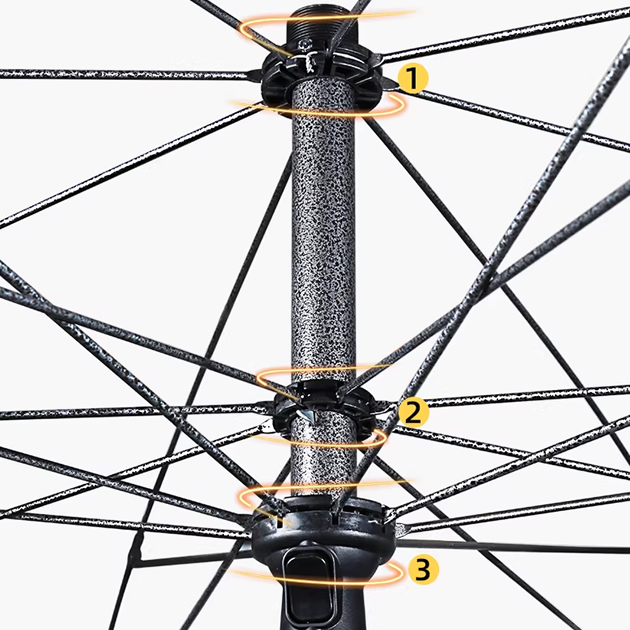
Double Layer Ribs vs. Triple Layer Ribs: This refers to the canopy's overall support structure. Imagine the ribs spreading out from the center pole.
A double layer ribs system has two concentric rings of ribs supporting the canopy. It's a standard, reliable construction for mid-size umbrellas.
A triple layer ribs system adds a third, outermost ring of support. This creates a more robust framework, distributing wind tension and fabric stress more evenly. It is almost always found on larger umbrellas (over 50 inches) and is a key feature of high-end, wind resistant umbrella models. It prevents sagging and flapping in the canopy.
The Verdict: Choosing Your Perfect Frame
For the best blend of durability, wind resistance, and value, powder-coated steel frames with double or triple layer ribs are an excellent all-around choice. For the ultimate in wind resistant performance, especially in portable umbrellas, prioritize fiberglass ribs. Choose wood for stationary, aesthetic-focused settings in calm areas, and be cautious with pure iron due to its weight and rust potential.
Always remember: a great canopy is only as good as the frame that holds it up. Investing in quality umbrella frame material and construction ensures your shady oasis stands strong for seasons to come.